Artificial Intelligence is no longer a future trend—it is reshaping how organizations hire, engage, develop, and retain talent today. From recruitment automation and workforce analytics to employee self-service platforms and predictive insights, AI is transforming Human Resources at an unprecedented pace.
Yet, amid all this technological advancement, one truth remains clear: the most valuable skills in the workplace are becoming increasingly human.
As professionals, we can choose to fear AI, compete with it, or learn to leverage it while strengthening the capabilities that make us uniquely human. The future belongs to those who can do both.
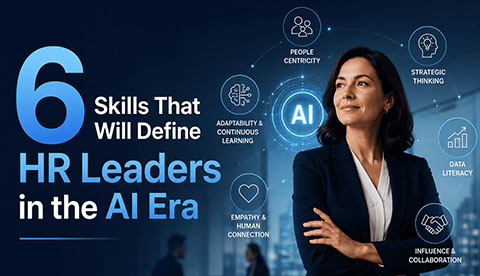
Here are six skills I believe every HR professional and leader should cultivate to thrive in the AI era.
- Thriving in Uncertainty
The pace of technological change means that many of the answers we seek today may become obsolete tomorrow.
Organizations are experimenting with AI, redesigning roles, and reimagining workforce structures. The ability to remain calm, adaptable, and decisive amidst uncertainty is becoming a competitive advantage.
Throughout my career, I have learned that transformation rarely comes with a complete roadmap. Whether implementing new HR systems, supporting organizational change, or improving employee experience, leaders must often make decisions with incomplete information.
The ability to move forward despite uncertainty is a skill worth mastering.
- Knowing What Truly Matters
AI can generate reports, analyze data, and recommend actions. What it cannot do is determine what is most important to an organization’s mission, culture, and people.
Strategic judgment remains a distinctly human responsibility.
HR professionals must be able to distinguish between what is urgent and what is important, ensuring that technology serves business goals rather than becoming the goal itself.
The most impactful leaders are not those who do the most work—they are those who focus on the work that creates the greatest value.
- Preserving Independent Thinking
AI can draft emails, summarize documents, and even generate policies. While these capabilities improve efficiency, they can also create dependency.
As professionals, we must continue exercising our ability to think critically, challenge assumptions, and form independent conclusions.
Data should inform decisions, not replace judgment.
The organizations that succeed in the AI era will be led by people who use AI as a tool—not as a substitute for thinking.
- Building Genuine Human Connections
Employee experience cannot be automated.
Technology can facilitate communication, but it cannot replace trust, empathy, and authentic relationships.
Whether supporting employees through change, coaching managers, resolving workplace conflicts, or fostering engagement, human connection remains at the heart of effective HR leadership.
In a world increasingly mediated by technology, the ability to connect with people may become one of the most valuable leadership skills of all. Experts consistently identify relationship-building, empathy, and emotional intelligence as among the least replaceable workplace capabilities.
- Strengthening Ethical Judgment
As AI becomes more integrated into organizational decision-making, questions about fairness, bias, transparency, and accountability will only grow.
Just because technology can make a decision does not mean it should.
HR leaders have a responsibility to ensure that AI is used responsibly and ethically, particularly in areas affecting people’s careers, opportunities, and livelihoods.
The future of work requires leaders who can balance innovation with integrity. Ethical reasoning remains a uniquely human capability that organizations cannot afford to outsource.
- Developing a Distinctive Point of View
AI can generate content, but it cannot replicate lived experience, personal values, or authentic leadership perspectives.
As AI-generated outputs become increasingly common, originality and authenticity will become differentiators.
Every professional should strive to develop a unique perspective shaped by their experiences, lessons learned, successes, and failures.
Your competitive advantage is not your ability to sound like everyone else.
It is your ability to bring a perspective that no one else can offer.
Final Thoughts
The AI era is not a battle between humans and machines.
It is an opportunity to elevate the skills that make us uniquely human while leveraging technology to amplify our impact.
For HR professionals, the future is not about replacing people with technology. It is about creating workplaces where people and technology work together to achieve extraordinary outcomes.
As AI continues to evolve, I believe the most successful leaders will be those who combine technological fluency with human-centered leadership.
Because in the future of work, being more human, not less—may be our greatest advantage.